


 +86 152 6060 5085
 English
 русский
 español
 português
 العربية
 Polski
- Home
- Products
- News
- Blog
- Customer Cases
- About Us
- Contact Us


Model :
M027ABrand :
UTSTESTERCertificate :
CE, ISO 17025 Calibration CertificateLead Time :
15-30 DaysPayment :
TT, LCOriginal Region :
MADE IN CHINAPort Of Dispatch :
CHINA PORTStandards :
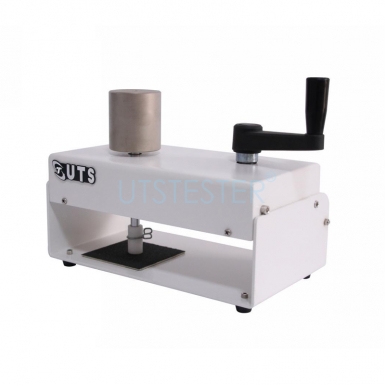
GB/T5453 GB/T13764 ISO9237 ISO7231 ISO5636 ASTM D737 DIN 53887 JIS L1096 BS5636M027A Digital Air Permeability Testing Machine
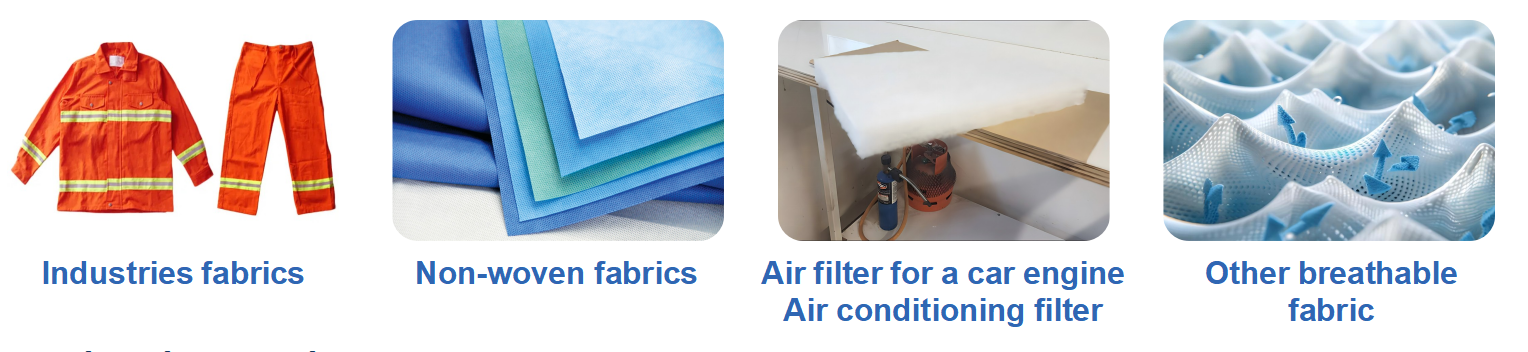
Air permeability testing machine is to test the air permeability of various woven fabrics, including industries fabrics, non-woven and other breathable fabric.
Features
Manual clamp sample and replace nozzle.
Microprocessor processed, test results directly displayed.
Built-in continuous test mode, test units can be switched based on demands.
English touch screen menu operation, equipped with computer port.
Test Standards
GB/T5453 GB/T13764 ISO9237 ISO7231 ISO5636 ASTM D737 DIN 53887 JIS L1096 BS5636
Key Parameters
|
Model |
M027A |
|||||||||||
|
Operation display |
Touch screen |
|||||||||||
|
Pressure difference range |
1-4000Pa |
|||||||||||
|
Permeability range |
0.1~12000mm/s |
|||||||||||
|
Measuring error |
≤±2% |
|||||||||||
|
Fabric thickness |
≤12mm |
|||||||||||
|
Testing area |
5cm2, 20cm2, 50cm2, 100cm2 Ф50mm (≈19.6cm2), Ф70mm(≈38.5cm2) |
|||||||||||
|
Nozzle parameter |
No. |
0 |
1 |
2 |
3 |
4 |
5 |
6 |
7 |
8 |
9 |
10 |
|
|
Φ (mm) |
0.8 |
1.2 |
2 |
3 |
4 |
6 |
8 |
10 |
12 |
16 |
20 |
|
Power supply |
AC 220V 50/60HZ, 2KW |
|||||||||||
|
Dimensions |
700 x 520 x 1100mm (L x W x H) |
|||||||||||
|
Weight |
93kg |
|||||||||||
|
Reference |
Title |
Scope / application |
Status / note |
|
ISO 9237:1995 |
Textiles — Determination of the permeability of fabrics to air |
Most fabrics, including industrial fabrics for technical purposes, nonwovens and made-up textile articles that are permeable to air. |
Current ISO listing; reviewed and confirmed in 2023. |
|
ASTM D737-18(2023) |
Standard Test Method for Air Permeability of Textile Fabrics |
Woven, nonwoven, air-bag, blanket, napped, knitted, layered and pile fabrics; treated and untreated fabrics are included. |
ASTM lists the 2023 revision as active and notes use for commercial acceptance testing. |
|
ISO 7231:2023 |
Polymeric materials, cellular, flexible — Determination of air flow value at constant pressure-drop |
Flexible cellular polymeric materials; includes conventional materials and especially low-permeability materials. Method B includes manual and automatic measurement. |
Relevant to cellular polymeric materials rather than textile fabric air permeability. |
|
Nozzle Group |
Pore Size Range |
Throttling Resistance |
Suitable Air Permeability Grade |
Typical Samples |
|
Small-hole nozzle |
0.8~3mm |
High |
Low breathability |
Coated fabrics, films, tightly woven fabrics, filter paper |
|
Medium-hole nozzle |
4~10mm |
Medium |
Medium breathability |
Standard woven/knitted fabrics, conventional nonwovens |
|
Large-hole nozzle |
12~20mm |
Low |
High breathability |
Sponge, filter cotton, fluffy nonwovens, coarse mesh fabric |
|
|
|
|
|
Item |
M027A Digital Air Permeability Tester |
M027B Auto Air Permeability Tester |
|
Applicable Materials |
Breathable fabrics such as various woven fabrics, industrial fabrics, and nonwoven fabrics. Automotive Engine Air Filters, Air Conditioning Filters. |
Specialty industrial fabrics, general-purpose fabrics, knitted fabrics, coated fabrics, nonwoven fabrics. Automotive Engine Air Filters, Air Conditioning Filters. |
|
Applicable Standards |
ASTM D737、GB/T 5453、GB/T 13764、BS 5636、JIS L1096、DIN 53887 |
ISO 9237、ISO 9073、ISO 7231、ISO 5636、ASTM D737、GB/T 5453、GB/T 2624、GB/T 13764、GB/T 18422、DIN 53887、JIS L1096、BS 5636 |
|
Test Area of the Specimen |
20cm²、38.3cm²(5cm²、20cm²、50cm²、100cm² Optional) |
20cm²、38.3cm²(5cm²、20cm²、50cm²、100cm² Optional) |
|
Nozzle Configuration |
11 orifice sizes (0.8/1.2/2/3/4/6/8/10/12/16/20 mm), corresponding to the full range of No. 0–10 nozzles |
11 orifice sizes (0.8/1.2/2/3/4/6/8/10/12/16/20 mm), corresponding to the full range of No. 0–10 nozzles |
|
Nozzle Replacement |
Manual Replacement |
Automatic replacement; supports automatic detection of the test area |
|
Dimensions (L × W × H) |
700 × 520 × 1100 mm |
1000 × 400 × 960 mm |
|
Total Weight |
93kg |
90kg |
To test the air permeability of various woven fabrics, including industries fabrics, non-woven and other breathable fabric.
The test data are calculated by the computer, eliminating the need for manual table conversion. The instrument uses a high-precision differential-pressure sensor in place of the traditional differential-pressure test approach.
Nozzles can be selected according to the measurement range. The nozzle set covers No. 0–10 with diameters from 0.8 mm to 20 mm.
The sample fixing device is cylinder-controlled and automatically presses the specimen when the test starts, helping maintain a tight fit during the measurement.
A high-definition color touch screen is provided. The instrument can operate online with a computer and automatically draw a real-time test-data curve.
Users can directly enter test parameters and select units. This interface supports the configuration of sample area, air permeability units, sample pressure difference, number of nozzles, and number of test samples.
• Built-in Report Generation Workflow
Features direct data querying, output to a mini-printer, printable test reports, and the ability to export detailed test report files.
• Multiple Statistical Outputs
Printed reports can include test values, averages, root mean square error, coefficient of variation (CV) values, and 95% confidence intervals.
• Extensive Test Area and Range Coverage
The system supports six test area options, with a pressure difference range of 1–4,000 Pa and a nominal permeability range of 0.1–12,000 mm/s.
A:Pressure-difference range is 1–4000 Pa.
A:Permeability range of 0.1–12000 mm/s and a measuring error of ≤ ±2%.
A:Yes. The CPU calculates the test data automatically, reducing the need for manual table conversion. It also automatic feedback control of the suction fan.
Q: Can the tester print or export reports?
A:Yes. A micro thermal printer, direct printing of queried data, report output and export of detailed test report files.
Q: Can the tester connect to a computer?
A:Yes. The touch-screen instrument can operate online with the upper-computer software and draw real-time test-data curves automatically.
A:The parameter interface allows the number of test-sample times to be entered from 1 to 20.
A:Yes. It provides a password-protected calibration interface for calibrating the sample differential pressure sensor and the nozzle differential pressure sensor. We recommend contacting after-sales support for calibration instructions.
Q: What auxiliary equipment and installation requirements are listed?
A:A user-specified AC power supply and air compressor are required; no water supply, drainage, or exhaust is needed. We recommend using a constant temperature and humidity environment, and specify that the computer must run the Microsoft Windows operating system.
Previous product
M027B Full Automatic Air Permeability TesterPARTERNERS
Related Product

Room 312, Block D, Jiayuan Garden, No.2 Zhongfa Road, Zhangzhou City, Fujian Province, China

+86 152 6060 5085

+86 596 7686689


 hello@utstesters.com
 hello@utstesters.com
 +86 152 6060 5085
 +8615260605085